

Speedy Tree Services Urges Winter Prep for Drought-Stressed North Texas Trees
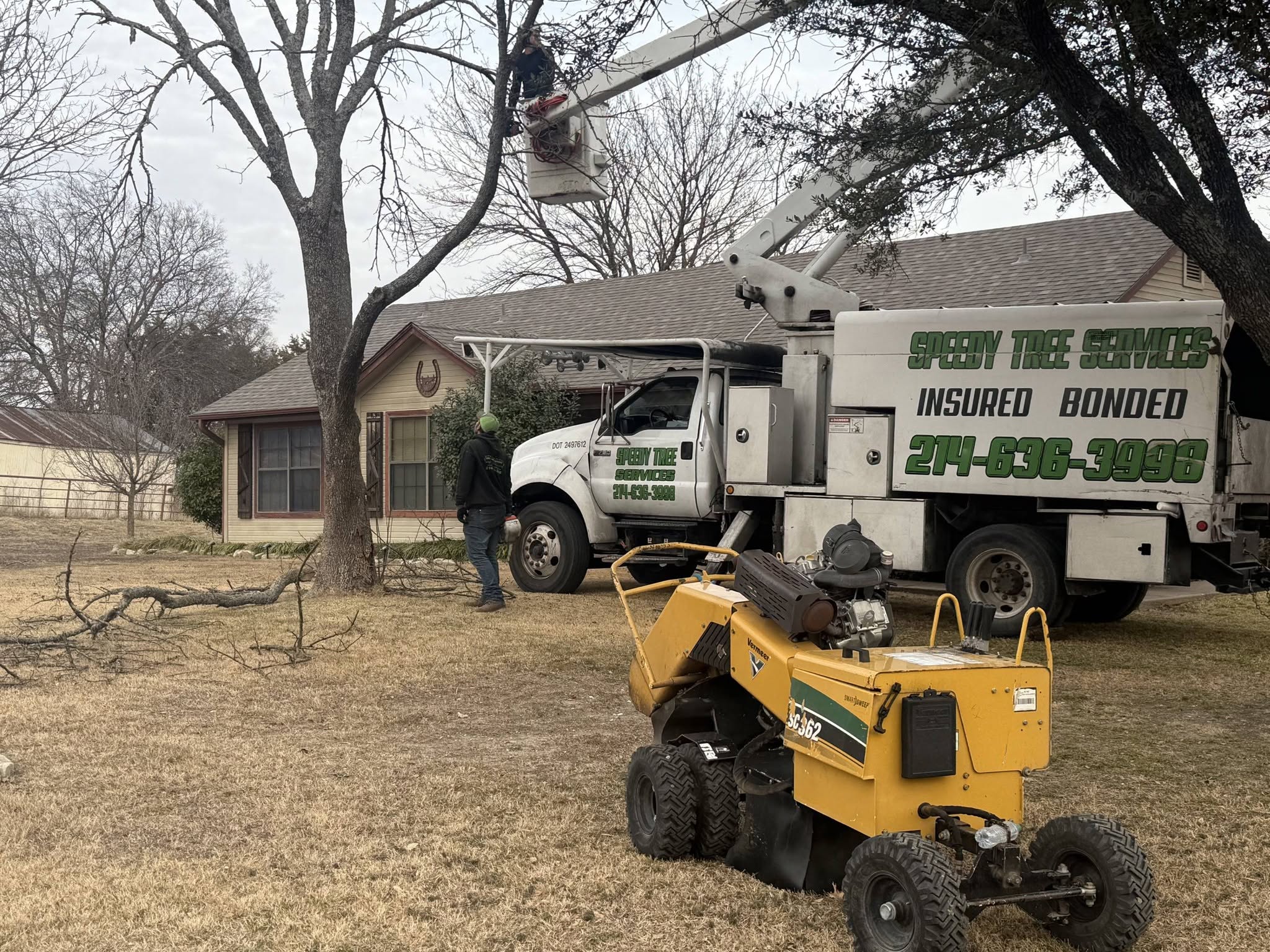
Speedy Tree Services crews trim a dormant tree in North Texas, when leaf-off conditions make weak limbs easier to identify.
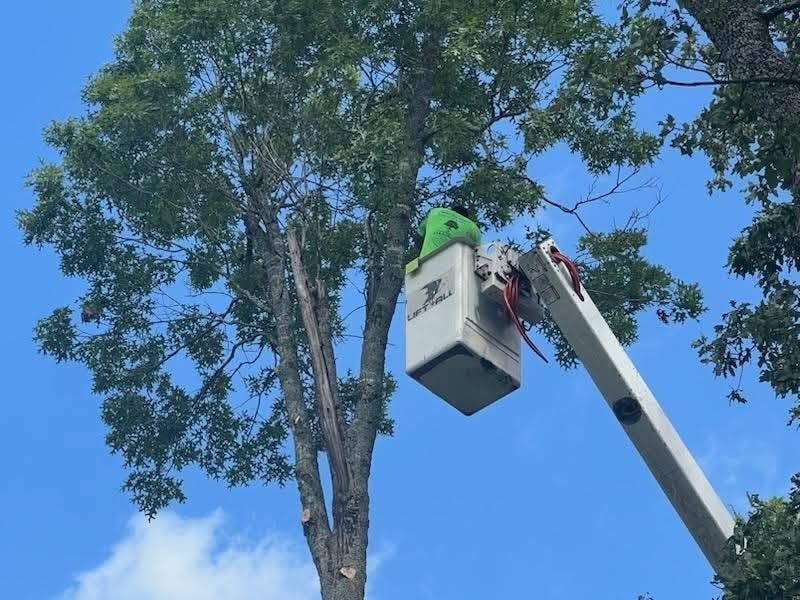
A crew member removes limbs from a mature tree using a bucket lift.
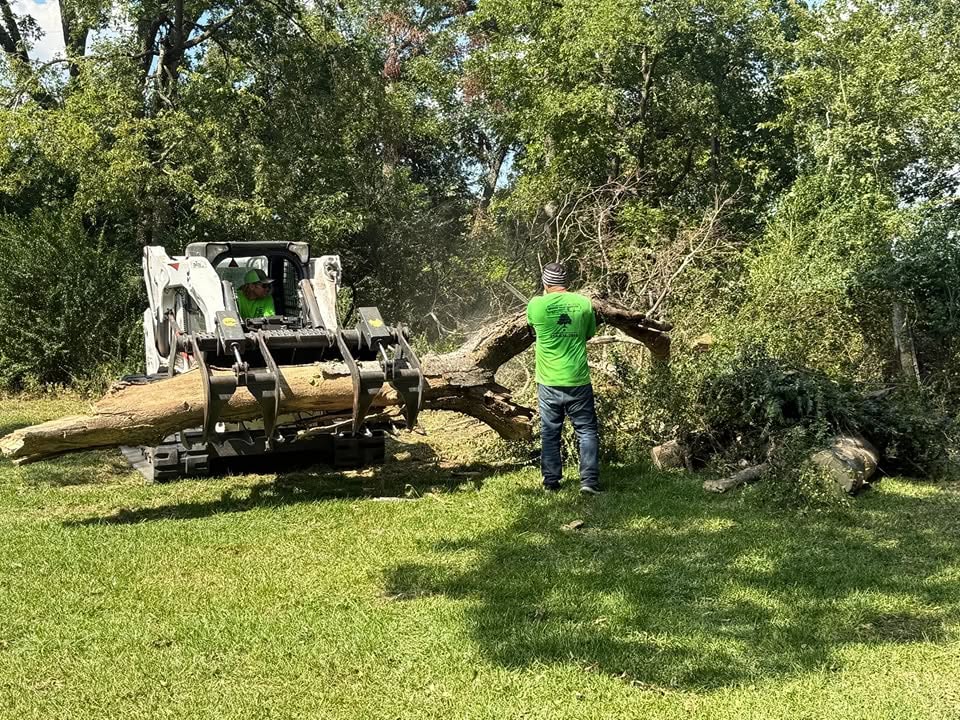
Large fallen trees are moved with a grapple-equipped skid steer during cleanup.
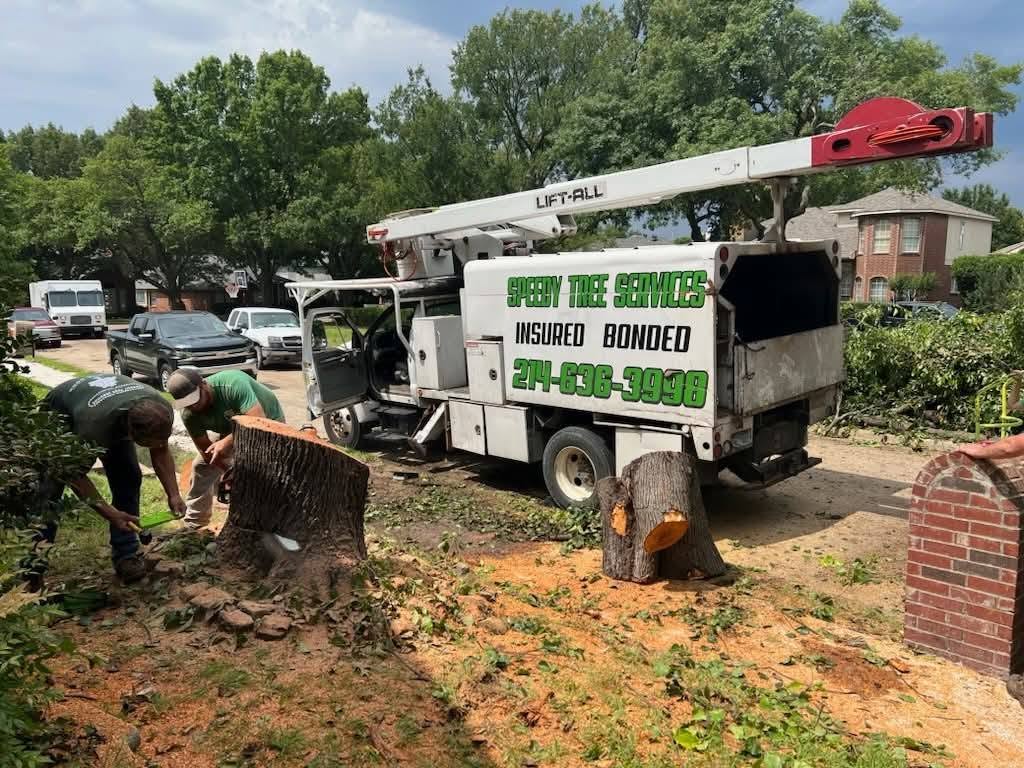
Speedy Tree Services crew members finish a residential tree removal.
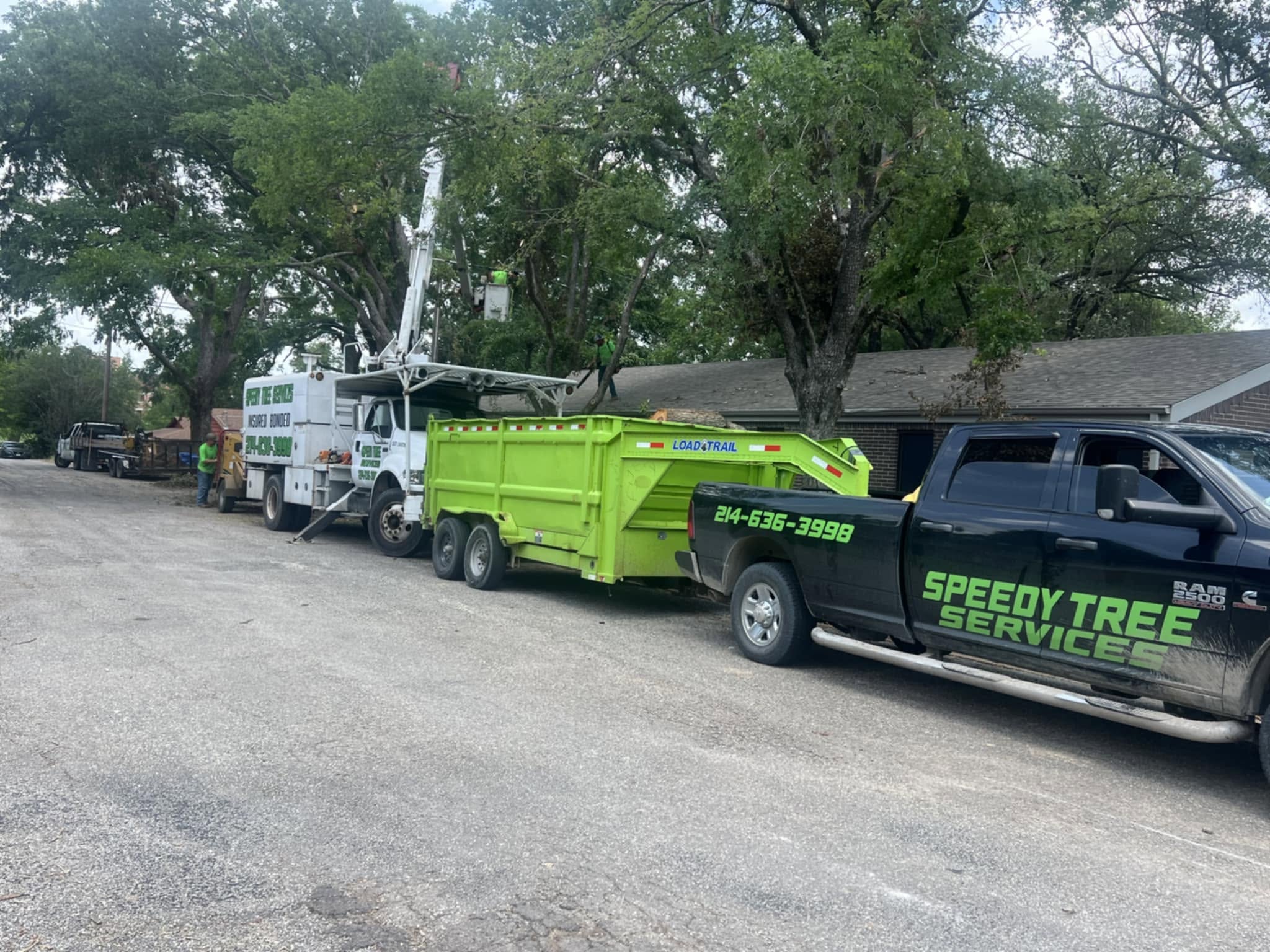
Speedy Tree Services equipment on a North Texas job site.
Farmersville tree care company outlines drought recovery, deep root fertilization, and pre-storm steps as a strong El Niño shapes the winter outlook.
The timing reflects conditions documented by federal forecasters. The National Weather Service office in Fort Worth reported that drought across North and Central Texas worsened considerably through September 2026 as persistent heat and exceptionally dry weather continued. In mid-October, the National Oceanic and Atmospheric Administration (NOAA) released its 2026-2027 winter outlook, which favors wetter-than-normal conditions across much of the southern United States as a strong El Niño continues to influence the pattern.
“A tree that went through this summer is going into winter with less in reserve than it had a year ago,” said Jason Moncier, owner of Speedy Tree Services. “Some of that damage is easy to see, like brown leaves and dead wood at the top of the canopy. A lot of it isn’t. The best time to find a weak limb is on a calm fall afternoon, not after it comes down on a roof during an ice storm.”
Speedy Tree Services provides residential and commercial tree trimming, tree removal, pruning, cabling and bracing, stump grinding, land clearing, hazardous tree assessment, emergency storm damage cleanup, and deep root fertilization. The company operates from 699 S. State Highway 78 in Farmersville and works throughout Collin, Denton, Grayson, Hunt, and Lamar counties. Moncier has roughly 30 years of hands-on experience in the tree care trade, and the company has operated as an incorporated business since 2016. Its crews work from insured and bonded service trucks equipped with bucket lifts, chippers, stump grinders, and grapple-equipped skid steers for large removals and debris handling.
Every job begins with an in-person evaluation. Speedy Tree Services does not provide estimates over the phone or from photographs, a practice that carries particular weight for drought-stressed and storm-damaged trees, where the condition of the trunk, root flare, limb attachments, and upper canopy needs to be seen firsthand before anyone can say whether a tree should be fed, trimmed, braced, or removed.
What the 2026 Drought Did to North Texas Trees
By late September, according to the National Weather Service in Fort Worth, severe drought had expanded across much of North Texas, with pockets of extreme drought developing along the Red River and portions of the Interstate 35 corridor. A mid-September drought statement from the same office placed extreme drought in parts of the eastern Dallas-Fort Worth Metroplex and in locations adjacent to the Red River, areas that overlap the communities Speedy Tree Services regularly serves in Collin, Grayson, and Lamar counties.
Rain in late September and early October brought some relief. The U.S. Drought Monitor map valid October 6 showed a noticeable reduction in drought severity across parts of North Texas, particularly west of I-35. The National Weather Service cautioned, however, that moderate to severe drought remained widespread, that pockets of extreme drought persisted in northeastern North Texas, including parts of the Metroplex, and that soil moisture deficits remained substantial in many areas. NOAA’s Climate Prediction Center outlooks favor continued drought improvement across much of North and Central Texas through the end of December, but the stress trees accumulated over the summer does not disappear when the rain returns.
Trees have no internal reservoir to draw on during extended dry periods, a point Texas A&M Forest Service has emphasized in its public drought guidance. When soil moisture runs short, trees close the pores on their leaves to conserve water, which slows photosynthesis, the process that produces the stored energy trees rely on to grow roots, defend against pests, and push out new leaves in spring. Prolonged drought can also kill the fine feeder roots in the upper layers of soil that handle most of a tree’s water and nutrient uptake. A tree can enter dormancy looking reasonably healthy while carrying a depleted energy reserve and a reduced root system into the following year.
Texas A&M Forest Service has also noted that stressed trees become more vulnerable to secondary pests and diseases, meaning insects and fungi that attack a tree already weakened by drought or a winter storm. During previous Texas droughts, the agency reported the most drought-related mortality among oaks, some elms, hackberries, and junipers. Those species are among the most common trees on North Texas residential and rural properties, alongside cottonwood, Bois d’Arc, crepe myrtle, and Bradford pear.
Signs that a tree may be struggling after drought include leaves that browned, curled, or dropped early; scorched leaf edges; a thinning canopy; dead branch tips concentrated in the upper crown; loose or cracked bark; fungal growth near the base of the trunk; and new cracks or splits in major limbs. Some of these symptoms resolve as trees recover. Others point to structural decline that should be evaluated before winter weather puts additional load on the tree.
How Deep Root Fertilization Supports Drought Recovery
Deep root fertilization is a tree care practice that places nutrients in the soil where a tree’s roots actively absorb them, rather than spreading fertilizer across the surface. In residential landscapes, lawn grass competes heavily for surface-applied nutrients, and the dense clay soils found across much of North Texas can limit how far water and nutrients move downward. The service is commonly performed by injecting a liquid nutrient solution into the soil at multiple points across a tree’s root zone.
Speedy Tree Services offers deep root fertilization as a preventive service for mature and established trees. The goal is to support stronger root and canopy growth and help trees better withstand North Texas drought, disease pressure, and storm stress over time. The company recommends considering the service for valuable shade trees while they are still structurally sound, rather than waiting until a tree has already lost much of its canopy.
“Fertilization doesn’t replace water, and it won’t save a tree that’s already failing,” Moncier said. “What it does is give a stressed tree the nutrients it needs to rebuild roots once the moisture comes back. We look at the tree first. If it’s sound and worth saving, feeding the root zone can help it come out of this drought in better shape. If it has serious decay or a bad split, we tell the owner that, too.”
Several considerations apply before scheduling the service. Fertilization works best when the soil holds adequate moisture, so watering comes first; nutrients applied to bone-dry soil are poorly absorbed and can add stress to already damaged roots. Not every tree is a candidate. A tree with extensive internal decay, a major structural defect, or advanced dieback may not respond, and feeding it does nothing to reduce the safety risk it poses to a home or driveway. That is one reason an in-person assessment of the trunk, root flare, and canopy precedes any recommendation.
Watering and mulching remain the foundation of drought recovery. Texas A&M Forest Service recommends watering with a hose, bubbler, or drip system rather than overhead sprinklers to reduce waste, and it identifies mulching as another way to help trees manage drought stress. A layer of organic mulch spread across the root zone, kept several inches away from the trunk, moderates soil temperature and slows evaporation. Slow, deep watering across the area beneath and beyond the edge of the canopy reaches roots more effectively than frequent light sprinkling. Property owners should follow any local watering restrictions that apply in their community.
Why Drought-Stressed Trees Face Greater Winter Risk
NOAA’s Climate Prediction Center gives better than an 80 percent chance that at least a strong El Niño will continue through January, February, and March 2027. In announcing the winter outlook, National Weather Service Director Ken Graham explained that a very strong El Niño typically shifts the jet stream south and east, which tilts the odds toward stormier weather across the South. The outlook is less definitive about temperature, and NOAA notes that seasonal outlooks cannot forecast individual winter storms.
That uncertainty matters for tree owners. North Texas winters can bring freezing rain, sleet, and ice accumulation even in years without significant snowfall, and a single ice event can cause widespread limb failure. Karl Flocke, a woodland ecologist with Texas A&M Forest Service, has noted that ice can increase the weight of a branch by as much as 20 times. Limbs already weakened by drought dieback, internal decay, or poor attachment are the most likely to fail under that load, and they often fall onto roofs, vehicles, fences, and overhead lines.
Texas has seen that combination before. After the February 2021 freeze known as Winter Storm Uri, Texas A&M Forest Service reported that many trees developed frost cracks and continued to show stress months later. When an ice storm struck Central Texas in early 2023, local foresters attributed much of the limb damage to trees that had already been weakened by the earlier freeze and by drought the previous summer.
Wet weather carries its own risk. Saturated soil holds roots less firmly, and trees with drought-damaged or decaying root systems are more prone to uprooting in high winds. A wetter-than-normal winter following a severe drought is a combination worth watching, particularly for large trees growing near homes, driveways, fences, and power lines.
Preparing Trees Before Winter Weather Arrives
Fall and early winter offer practical advantages for pre-storm tree work. Once deciduous trees drop their leaves, branch structure is easier to see, which makes it simpler to identify dead wood, cracked limbs, and weak unions. Timing also matters for oaks. Texas A&M Forest Service oak wilt guidance advises against pruning oaks from February through June, when the insects that spread the disease are most active, which makes late fall and early winter a preferred window for oak work.
Before winter weather arrives, property owners and tree professionals typically focus on removing dead, broken, or hanging limbs, sometimes called widow-makers, that can fall without warning. Limbs extending over roofs, chimneys, driveways, and play areas can be shortened or removed to reduce the potential for damage. Trees with co-dominant trunks, included bark, or visible cracks at major unions may be candidates for cabling and bracing, which adds structural support to a valuable mature tree and reduces the risk of a split. Trees with advanced decay, significant lean, or root damage may need to come down entirely, especially when they stand within striking distance of a structure.
Restraint is equally important. Removing too much live canopy from a tree that is already stressed reduces its ability to produce energy and recover, and topping, the practice of cutting back large limbs to stubs, creates weak regrowth that is more likely to break in future storms. Proper tree trimming removes the right limbs at the right locations and leaves the rest of the canopy intact.
Ahead of a hard freeze, watering trees can help reduce cold-weather stress, according to Texas A&M Forest Service. Property owners should never attempt to trim branches near energized power lines; those situations should be reported to the local electric utility.
After a winter storm, Speedy Tree Services advises property owners to stay clear of downed lines, avoid standing beneath ice-coated trees, and photograph damage before cleanup for insurance purposes. Chainsaw work on trees that are under tension, hung up in other trees, or resting on structures is among the most dangerous tasks in tree care and should be handled by experienced professionals. For trees that appear dead after a freeze but pose no immediate hazard, Texas A&M Forest Service has encouraged Texans to be patient, since some trees that look lost in late winter recover and leaf out later in the season.
Serving Farmersville and the Surrounding North Texas Region
Farmersville sits in eastern Collin County, where established neighborhoods, fast-growing suburban communities, and rural acreage meet. Properties across the area range from residential lots shaded by decades-old oaks and pecans to pastures lined with hackberry, cedar, and Bois d’Arc along fence rows. Each setting presents different risks during a drought-to-winter transition, from limbs hanging over rooftops in town to large trees that can block private roads and driveways on rural land when they fail.
Speedy Tree Services serves residential and commercial customers throughout Collin, Denton, Grayson, Hunt, and Lamar counties, including Farmersville, Allen, Anna, Bonham, Commerce, Denison, Melissa, Paris, Plano, Sherman, and Wylie. Commercial work includes tree trimming, large-scale removals, land clearing, and hazardous tree assessments for businesses, property managers, and commercial landowners. The same process applies regardless of property size: an in-person visit, an honest evaluation of what the trees need, completion of the agreed work, and a thorough cleanup before the crew leaves.
During the winter months, the company also sells firewood sourced from tree work completed throughout the year.
About Speedy Tree Services
Speedy Tree Services is a residential and commercial tree care company based at 699 S. State Highway 78 in Farmersville, Texas. Owned and operated by Jason Moncier, who has roughly 30 years of hands-on experience in tree care, the company has been incorporated since 2016. Speedy Tree Services provides tree trimming, tree removal, pruning, cabling and bracing, stump grinding, deep root fertilization, land clearing, hazardous tree assessments, and emergency storm damage cleanup throughout Collin, Denton, Grayson, Hunt, and Lamar counties in North Texas. The company is insured and bonded, and every project begins with an in-person evaluation.
To schedule an in-person evaluation, call (214) 636-3998, email info@speedytreeservices.com, or visit https://speedytreeservices.com/.
Jason Moncier
Speedy Tree Services
+1 214-636-3998
info@speedytreeservices.com
Visit us on social media:
Facebook
Instagram
Legal Disclaimer:
EIN Presswire provides this news content "as is" without warranty of any kind. We do not accept any responsibility or liability for the accuracy, content, images, videos, licenses, completeness, legality, or reliability of the information contained in this article. If you have any complaints or copyright issues related to this article, kindly contact the author above.
